
In 2025, the ambulatory surgery center (ASC) market continued to solidify its role as a core site of care for elective and increasingly complex outpatient procedures. Growth was driven by steady operator expansion, ongoing industry consolidation, and favorable regulatory tailwinds. Leading platforms advanced their footprints through de novo development and strategic partnerships, while health systems deepened their ambulatory strategies via joint ventures and, in one of the year’s most notable moves, a large-scale acquisition designed to accelerate outpatient access across multiple states. On the policy front, the Centers for Medicare & Medicaid Services (CMS) actions in the CY 2026 Outpatient Prospective Payment System (OPPS) and ASC final rule reinforced momentum toward outpatient migration by expanding the range of procedures eligible for ASC reimbursement and updating payment rates. Meanwhile, site-neutral payment discussions remained an active backdrop as providers and payers continued to assess the most cost-effective setting for comparable services.
Ambulatory Surgery Center Market Overview
As of December 31, 2025, the nation’s largest ASC owners and operators continued to expand their footprints. United Surgical Partners International (USPI), subsidiary of Tenet Healthcare, leads with ownership in over 520 ASCs, performing approximately 2 million procedures annually. USPI’s network grew further in 2025, including the addition of 11 ASCs in Q3 alone and having spent nearly $300M in acquisition activity through three quarters. Surgical Care Affiliates (SCA Health), part of Optum (UnitedHealth Group), also expanded via integration of physician networks. SCA entered 2025 with more than 320 surgery centers and, in January, acquired U.S. Digestive Health, a gastroenterology platform comprising 24 ASCs.
AmSurg Corporation, historically the third-largest chain with more than 250 centers, made headlines in 2025 with a definitive agreement to be acquired by Ascension in a reported $3.9B deal. This move will catapult Ascension’s ASC count from 58 to over 300 centers across 34 states once finalized, underlining the growing interest of hospital systems in the ASC space. HCA Healthcare remained active in the ASC market alongside its broader acute care platform, with ownership interests in more than 150 ASCs in addition to its hospital portfolio. HCA’s ambulatory strategy has remained closely geographically aligned with its hospital network, emphasizing market-specific deployment of outpatient assets rather than large-scale standalone expansion. Surgery Partners (SGRY) remained active in 2025. In addition to completing strategic transactions such as a joint venture with Baylor Scott & White Health for a facility in Bryan, TX, the company also rejected a take-private offer from its largest shareholder, Bain Capital, deciding to remain an independent public company based on its board’s view of long-term growth potential. The following chart illustrates the top owners and operators in the ASC space.

Public Market Insights in the ASC Industry
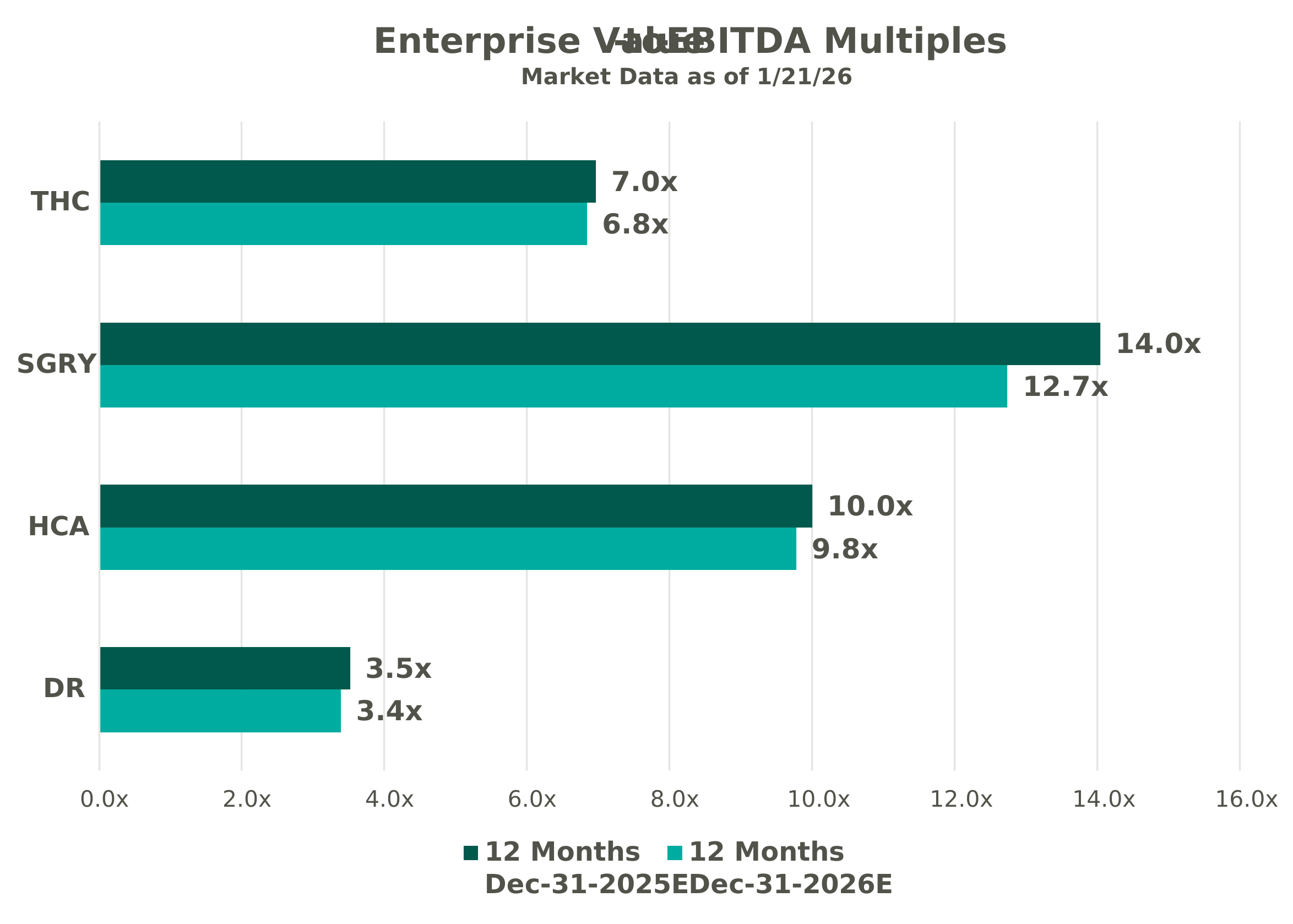
Publicly traded operators—including HCA Healthcare, Tenet Healthcare, Surgery Partners, and Medical Facilities Corporation—offer a useful lens into trends influencing the ASC industry. Trading multiples for these companies, shown in the figure below, are commonly referenced as indicators of public market sentiment toward outpatient surgical care.
Interpretation of these metrics requires context. Many public operators maintain diversified platforms that extend beyond ASCs, including hospital outpatient departments and acute care facilities, which can influence reported results and valuation outcomes. As a result, headline multiples may not fully reflect ASC-specific operating performance. Reviewing public disclosures, including earnings materials, investor presentations, and SEC filings, can help clarify how ASCs fit within each organization’s broader strategy and operating profile, providing perspective beyond valuation metrics alone.
Surgery Partners
In Q3 2025, Surgery Partners reported net revenue of approximately $822M, representing 6.5% year-over-year growth, and adjusted EBITDA of approximately $136M, an increase of 6.1% year over year, with EBITDA margins of approximately 16.6%. Same-facility revenue increased 6.3%, driven primarily by higher revenue per case, while same-facility surgical volumes grew in the low single digits. Orthopedic and other musculoskeletal procedures continued to growth, and those procedures remain the company’s highest-acuity service lines. During the quarter, management cited softer late-quarter commercial trends and slower capital deployment. As a result, Surgery Partners revised full-year 2025 guidance downward, tightening revenue guidance to $3.275B to $3.3B and adjusted EBITDA guidance to $535M to $540M. Management reiterated its focus on disciplined acquisitions, selective de novo development, physician recruitment in orthopedics and spine, and ongoing portfolio optimization.
Tenet Healthcare: United Surgical Partners International
Tenet Healthcare reported strong Q3 2025 results, driven by continued outperformance at USPI. Consolidated net operating revenue increased 3.2% year over year to approximately $5.3B, while adjusted EBITDA rose 12% year over year to approximately $1.1B. USPI generated approximately $1.28B in net operating revenue, supported by same-facility revenue growth of approximately 8.3% and same-facility surgical case growth of approximately 2.1%. Growth was led by orthopedics, gastroenterology, and urology, with total joint replacement volumes increasing at a mid-teens rate. USPI adjusted EBITDA increased to approximately $492M, representing 12.1% year-over-year growth, with margins of approximately 38.6%. Following the quarter, Tenet raised full-year 2025 guidance, citing sustained strength in its ambulatory segment and continued margin expansion. Management emphasized that USPI remains central to Tenet’s long-term growth and capital allocation strategy.
HCA Healthcare
HCA Healthcare reported Q3 2025 revenue of approximately $19.2B, representing 9.6% year-over-year growth, and adjusted EBITDA of approximately $3.9B, an increase of 18.5% year over year, with margins of approximately 20.2%. Same-facility outpatient surgery volumes increased 1.1%, while revenue per equivalent admission rose 6.6%, reflecting higher-acuity procedures and favorable payer mix. HCA continued to expand outpatient capacity through ASC development and hospital-based outpatient investments while maintaining strong operating discipline across its network. Based on the quarter’s performance, HCA raised full-year 2025 guidance, with management highlighting durable elective demand and continued migration toward higher-value outpatient care settings.
Medical Facilities Corporation
Medical Facilities Corporation reported Q3 2025 facility service revenue of approximately $82.6M, representing 7.5% year-over-year growth, with total surgical case volumes increasing 1.1%. EBITDA increased to approximately $15.8M, reflecting 10.2% year-over-year growth, with margins of approximately 19.5%, supported by improved payer rates, favorable case mix, and stronger performance at key facilities, including Sioux Falls Specialty Hospital. Outpatient and higher-acuity procedures continued to offset relatively flat inpatient volumes. During the quarter, the company repurchased approximately $5.6M of common shares. Full-year guidance was maintained, with management citing stable volumes, continued physician recruitment, and disciplined capital allocation.
CMS Significantly Expands ASC Covered Procedures List for CY 2026
In the CY 2026 OPPS and ASC Payment System Final Rule, released on November 21, 2025, CMS finalized one of the most consequential regulatory expansions for ASCs in recent history. Consistent with CMS’ view that clinical practice and technology have evolved to support higher-acuity outpatient care, the agency significantly broadened the scope of procedures eligible for reimbursement in the ASC setting, reinforcing the ongoing shift toward lower-cost sites of care.
For CY 2026, CMS finalized the addition of 289 surgical procedures to the ASC Covered Procedures List (CPL). In parallel, CMS added 271 procedures removed from the Inpatient Only (IPO) list directly to the ASC CPL, resulting in a combined total of 560 newly approved ASC procedures for the year. CMS noted that these procedures generally involve few to no inpatient admissions and are already widely performed in outpatient hospital departments, supporting greater physician discretion in site-of-service decision-making and offering patients more choice in where they receive care.
The expanded list includes cardiac ablation procedures, lumbar spinal fusion codes, and vascular embolization and occlusion services, marking a meaningful departure from historical Medicare policy that restricted higher-acuity cases to inpatient hospital settings. CMS specifically referenced improvements in procedural efficiency, anesthesia protocols, and post-operative monitoring as key factors supporting the transition of these services to outpatient environments when clinically appropriate.
In parallel with the CPL expansion, CMS finalized its proposal to begin phasing out the IPO list over a three-year period, starting in CY 2026 with the removal of 285 primarily musculoskeletal procedures. CMS stated that eliminating the IPO list is intended to better reflect current clinical practice and provide physicians with greater flexibility in determining the most appropriate site of care, while potentially reducing beneficiary out-of-pocket costs.
Medicare Reimbursement Updates for ASCs
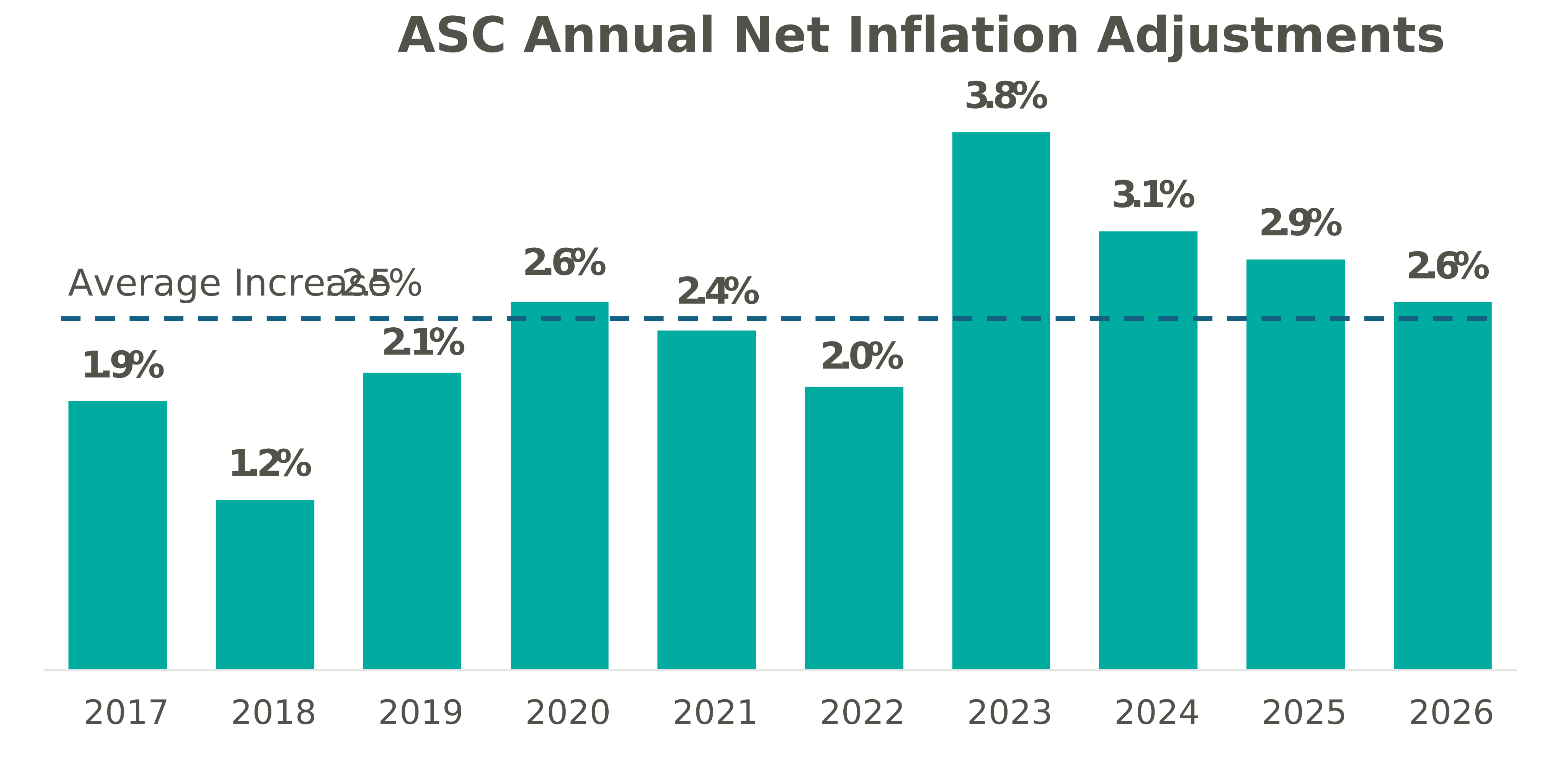
Alongside the expansion of the CPL, CMS finalized updated Medicare reimbursement rates for ASCs for CY 2026 and reaffirmed its policy of using the hospital market basket update, rather than the Consumer Price Index for All Urban Consumers, as the inflationary adjustment factor for ASC payments through CY 2026. CMS finalized an overall ASC payment update of 2.6%, reflecting a projected hospital market basket increase of 3.3%, offset by a 0.7% multifactor productivity reduction mandated under the Affordable Care Act. While this represents a modest increase relative to the proposed rule, the net update continues a broader declining trend in inflationary adjustments observed since 2023.
While reimbursement updates continue to lag certain cost pressures faced by ASC operators, the CY 2026 final rule reflects a mixed but directionally positive outlook for the industry. The expansion of reimbursable procedures materially increases the addressable market for ASCs, while continued moderation in payment updates places greater emphasis on operational efficiency, case-mix optimization, and strategic partnerships. The chart below contains a summary of the historical net inflation adjustments for CY 2017 through CY 2026, presented net of applicable adjustments, such as the multifactor productivity reduction. The CY 2026 inflation adjustment is slightly lower than the prior year, continuing a declining trend since 2023.
The table below summarizes estimated Medicare ASC payments for the top 10 CPT® codes performed in ASCs, comparing 2025 and 2026. Aggregate Medicare payments for these procedures are projected to increase by approximately 1.8% year over year, rising from $3.63B in 2025 to $3.69B in 2026, while representing a slightly smaller share of total Medicare ASC payments in 2026. Growth remains concentrated among a handful of high-volume procedures, led by cataract extraction without endoscopic cyclophotocoagulation, which is projected to increase by 4%. Several other procedures, including spinal neurostimulator and colonoscopy with lesion removal, are also expected to see modest payment increases. In contrast, certain procedures, such as esophagogastroduodenoscopy biopsy and shoulder reconstruction, are projected to experience payment declines, partially offsetting gains among the top CPT codes.

CMS has projected total ASC payments in 2026 to increase to approximately $9.2B, an increase of approximately $450M compared to estimated CY 2025 Medicare payments.
ASC Transaction Activity in 2025
ASC transaction activity in 2025 reflected a market shaped by ongoing consolidation among scaled operators, increased health system participation, and targeted private equity investment in specialty-focused platforms. Large national players accounted for the most visible transactions, while mid-sized operators and financial sponsors emphasized joint ventures, de novo development, and tuck-in acquisitions aligned with specific specialty strategies.
At the top end of the market, several transactions underscored the strategic importance of scale. Optum’s SCA Health expanded its gastroenterology platform through the acquisition of U.S. Digestive Health, adding 24 endoscopy ASCs and a large physician footprint across Pennsylvania and Delaware. In the most consequential deal of the year, Ascension signed a definitive agreement to acquire AmSurg for approximately $3.9B, expanding Ascension’s ASC portfolio from approximately 60 centers to more than 300 nationwide. Tenet Healthcare’s USPI also sustained steady growth through acquisitions and joint ventures, reinforcing its position as one of the largest ASC operators in the country. Meanwhile, Surgery Partners pursued selective acquisitions, including the purchase of two San Jose–area centers, and rejected a proposed buyout from its majority owner, Bain Capital.
Beyond these headline transactions, announced activity throughout the year underscored the diversity of growth strategies across the ASC landscape. In February and March, USPI entered a joint venture with Choice Care Surgery in Midland, Texas, while Compass Surgical Partners partnered with regional physician groups to develop the de novo Frisco Station Surgery Center in Frisco, Texas.
Private equity activity was most pronounced in specialty-focused platforms. In April, Wellspring Capital Management acquired Summit Spine & Joint Centers, a Southeastern pain management and spine platform with 17 ASCs. In June, Welsh Carson Anderson & Stowe made a strategic growth investment in Constitution Surgery Alliance, adding a multi-state ASC management platform to its healthcare portfolio.
Health system partnerships and joint ventures also remained active. In May, Cleveland Clinic announced a joint venture with Regent Surgical to develop and operate ASCs, with Cleveland Clinic as majority owner. Later in the year, Orlando Health and Solara Surgical Partners launched a national joint venture focused on optimizing existing centers and pursuing new development, while Regent Surgical expanded into the pediatric segment through a partnership with Patches Kids Care.
Taken together, ASC transaction activity in 2025 reinforced several durable themes: scale-driven consolidation among large operators, deeper health system engagement in outpatient surgery, and focused private equity investment in specialty platforms rather than broad-based roll-ups.
Site-Neutral Payments & the Outpatient Care Landscape
Site-neutral payment policy gained renewed attention in 2025 as policymakers continued to examine whether Medicare should pay different rates for the same service based solely on site of care. Historically, procedures performed in a hospital outpatient department (HOPD) have received higher reimbursement than the same procedure being performed in an ASC or physician office. This structure has drawn more scrutiny as care migrates to lower-cost settings.
Momentum built on both the legislative and regulatory fronts. In Congress, bipartisan interest in site-neutrality has largely been framed around cost containment and beneficiary affordability, including proposals aimed at improving billing transparency and narrowing payment differentials over time. At the regulatory level, CMS took incremental steps in the CY 2026 OPPS and ASC final rule to expand site-neutral payment treatment for select services within CMS’ existing statutory authority, including certain drug administration services, while related changes to the Medicare Physician Fee Schedule modestly narrowed reimbursement gaps for office-based care. While limited in scope, these actions align with longer-standing MedPAC recommendations to reduce unwarranted payment variation across outpatient settings.
For ASCs, the long-term implications of site-neutral payment reform are potentially meaningful but remain uncertain. Under current policy, Medicare ASC reimbursement for many procedures remains materially below HOPD rates, often cited at roughly 50–60% for comparable services, with commercial contracts frequently benchmarked off Medicare. Broader site-neutral reforms could either narrow this gap by reducing HOPD rates for select procedures or, less likely, increase ASC reimbursement where clinical risk and resource use are comparable. Either outcome would place greater emphasis on operational efficiency and cost structure rather than site-based pricing advantages. Hospital stakeholders have cautioned that broad application of site-neutral payments could pressure hospital finances and access to care, particularly for rural and safety-net providers, suggesting that any reforms are likely to be targeted and phased in.
Strategically, this policy backdrop has contributed to closer alignment between hospitals and ASC platforms, including increased joint-venture activity and consolidation. A notable example was the announcement of Ascension’s acquisition of AmSurg, reflecting broader recognition among health systems for the need to expand and operate efficiently in ambulatory settings as outpatient volumes continue to grow. Overall, site-neutral payment discussions in 2025 reinforced a gradual shift toward reimbursement models that prioritize value and efficiency, positioning ASCs well within a policy environment increasingly focused on cost-effective outpatient care delivery.
Looking ahead, the 2025 narrative points to an ASC sector poised for continued growth, albeit with execution risks that vary by operator and market. Consolidation and partnership activity will likely remain robust as platforms pursue scale, specialty depth, and physician alignment, and as health systems expand their ambulatory footprints to meet rising demand for convenient, lower-cost care. Simultaneously, reimbursement updates and ongoing site-neutral payment discussions underscore that sustained outperformance will hinge less on site-based pricing advantages and more on operational efficiency, quality outcomes, and disciplined capital deployment across the right procedures and patient populations. In this environment, ASCs are positioned as an increasingly critical component of the outpatient ecosystem, complementing hospital-based services while helping stakeholders balance access, affordability, and the appropriate clinical setting.
_____
These trends are shaping real operational and strategic decisions for ASCs today. Connect with VMG Health to explore how they may influence your organization’s next steps.
At the Becker’s 32nd Annual Meeting: The Business and Operations of ASCs, taking place October 29-31 in Chicago, ASC leaders, surgeons and healthcare executives will explore strategies to drive growth, enhance operational performance, navigate reimbursement challenges and prepare for the future of ambulatory surgery. Apply for complimentary registration now.
