
Endoscopies are among the most common procedures in the U.S. with millions performed each year. For providers to safely and efficiently perform a high volume of endoscopies there needs to be a high-performing endoscopy team, especially sterile processing technicians and endoscopy reprocessing technicians.
To learn more about reprocessing challenges facing endoscopy staff and how top-performing teams can address them, Becker’s healthcare spoke with two endoscope reprocessing experts from Healthmark, a Getinge company.
A complicated environment
Physicians and endoscopy teams often perform 12 to 16 endoscopy procedures per day, as each procedure typically takes just 15 to 30 minutes. This high volume puts technicians under constant pressure.
“It’s a very complicated environment,” said Mary Ann Drosnock, DrHSc, head of clinical affairs at Healthmark. “Technicians are faced with time and environmental pressures. They are gowned up in PPE. It can be hot. It’s wet. They’re putting their hands in sinks of cleaning solution. It’s a high-pressure, tough environment.”
Teams are responsible for ensuring that scopes are clean, safe and available for every procedure. To minimize risks and achieve high levels of patient safety, endoscopy teams must follow standards and guidelines, implement best practices and make sure documentation is accurate.
Imperfect scopes pose risk
When conducting an endoscopy, the scope is the critical tool and if a scope has any undetected damage, such as scratches or areas of poor integrity, it can expose patients to possible infection or injury. Dyan Darga, clinical education specialist at Healthmark, explained that scratches or crevices can attract bacteria and biofilm, which are hard to remove and can lead to infections.
Dr. Drosnock noted that in addition to biofilm, using a damaged scope can cause harm to a patient. She has seen damaged scopes hurt patients’ mucosal linings in the esophagus and in the intestinal tract as well as injuring ureters and kidneys. Recognizing the serious risks of infection and injury from use of unclean or damaged scopes, Healthmark recommends several best practices for detecting damage and decreasing the risks to patients.
Enhanced visual inspection
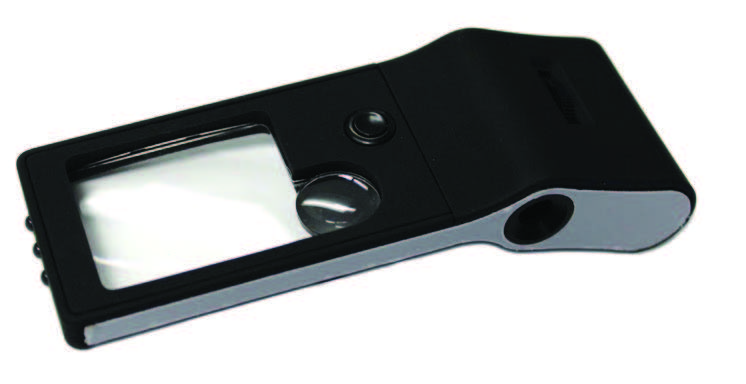
The easiest way to detect damage to a scope is through a simple visual inspection. But in most instances a basic visual inspection is not adequate. Ms. Darga recommends an enhanced visual inspection with lighted magnification.
“Enhanced visual inspection with 5X or 10X magnification completely changes the game and it allows us to see things the naked eye can’t see and provides much more detail,” Ms. Darga shared.
Enhanced visual inspection with magnification makes it possible to see debris, observe if something is stuck in a crevice and detect damage to a scope earlier. In addition to magnification, enhanced visual inspection also includes proper lighting.
Each year, medical device recalls and safety corrections prompt health systems to reassess how devices are inspected, maintained and used in clinical settings. Many of these actions are not tied to device failure alone, but to opportunities to strengthen inspection and reprocessing practices.
In the gastrointestinal and endoscopy space, recent device corrections have reinforced the need for enhanced visual inspection using higher levels of magnification—such as 10× magnification—for duodenoscopes. These specialized side-viewing scopes, used to perform ERCP procedures, have been implicated in multiple instances of infection transmission and even patient deaths. Higher magnification enables more effective detection of surface damage and residual debris.
These updates reflect a broader shift toward more rigorous inspection expectations, including performing enhanced visual inspection not only during reprocessing, but closer to the point of care. As a result, health systems are evaluating inspection tools that are small, handheld, and easy to clean and store within procedure rooms.
Dr. Drosnock shared that these requirements are new and many organizations are continuing to include them in their standard operating procedures.
Borescope benefits
While enhanced visual inspection is the standard for inspecting the outside of a scope, the best practice for inspecting the inside of a scope involves using a borescope. Borescopes help identify debris, organic material or damage within an endoscope.
Ideally, borescopes are used after an endoscope is manually cleaned, before the endoscope undergoes high level disinfection.
Frequent use of a borescope detects debris or damage earlier, improves an endoscope’s performance, decreases repair costs and extends an endoscope’s longevity.
Borescope use also reduces risks to patients and improves safety.
“Doing a borescope inspection every time results in detecting damage earlier,” Dr. Drosnock said. “Repair costs go down significantly and scopes can be used longer.”
The right documentation
Another best practice in the endoscopy workflow is rapid documentation of precisely when an endoscope is removed from the patient and the initial cleaning begins. This is referred to as the “point of use treatment” or POUT. It’s the first step in the cleaning and reprocessing chain.
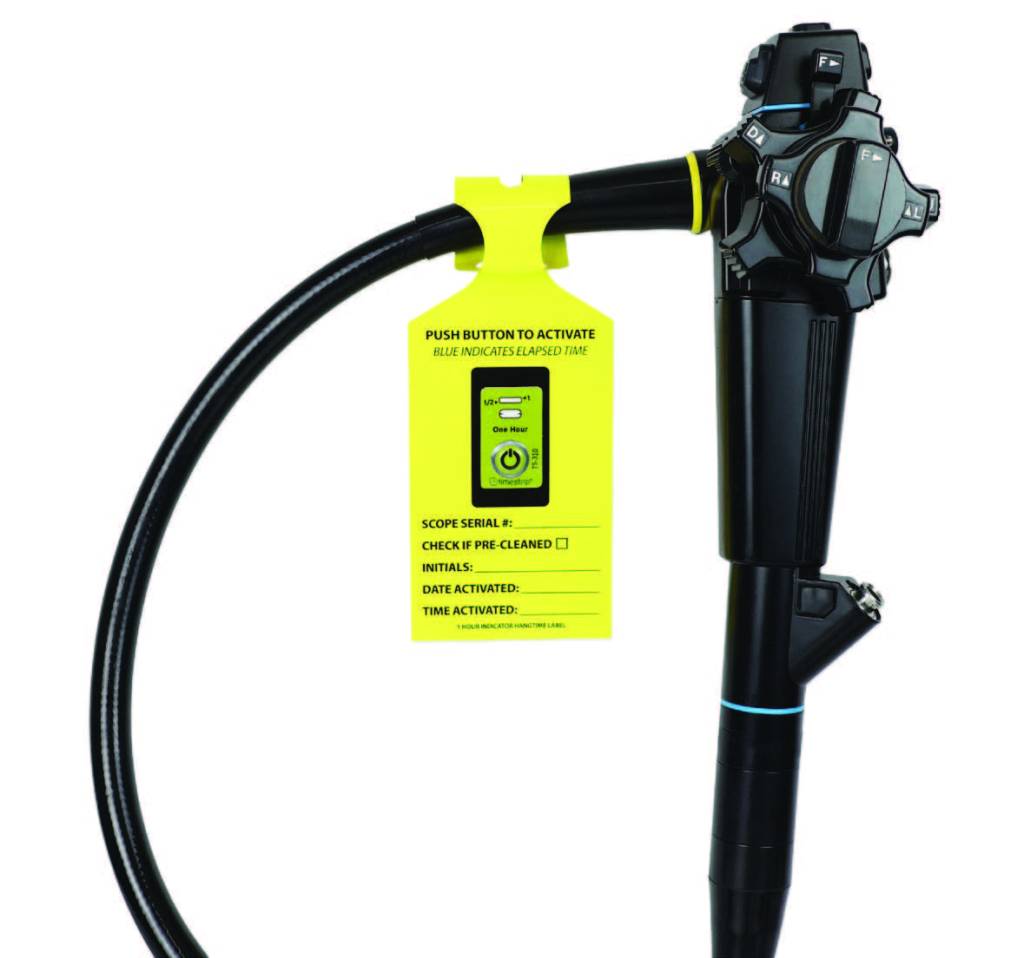
Accurate, timely notation of the POUT is essential to comply with the “golden hour.” This is the critical first 60 minutes from the POUT to when manual cleaning begins in the processing department. If an endoscope sits unprocessed beyond the “golden hour” after a procedure, it must undergo an extended detergent soaking period prior to manual cleaning, a process known as the delayed reprocessing protocol. If cleaning is not performed within this window, organic material can dry and harden on the endoscope, biofilm can begin to form and subsequent cleaning becomes more difficult, time-consuming, and costly.
While delayed reprocessing is intended to mitigate these risks, it introduces additional workflow complexity and variability, particularly in busy endoscopy units where tracking time out of use and ensuring proper adherence can be challenging. This makes it difficult to ensure delayed reprocessing compliance and, in turn, can compromise patient safety.
Ms. Darga said easy, practical ways to document the POU include using Healthmark’s one-hour hang tag, writing the POU on the biohazard label and entering this information into the electronic medical record.
Consistently documenting the POU is important even when the same person, typically a technician, is responsible for both the POU and processing. While it may be tempting to assume documentation isn’t necessary because the technician knows when the golden hour ends, unpredictability and distractions can intervene. Establishing a disciplined documentation process, which can take just seconds per case, helps reduce risk and improve safety.
The right standard
Decreasing the risks in endoscopy reprocessing through enhanced visual inspection, use of borescopes, effective documentation and other best practices requires establishing organizational competencies and implementing standard operating procedures.
Embedding the right competencies in the endoscopy team starts with hiring qualified technicians, continuously educating them through ongoing training and conducting frequent monitoring and audits.
Beyond instilling the necessary competencies, nothing replaces having consistent, repeatable processes, which ensures that reprocessing is done the same way after every procedure.
“Every scope should be inspected with enhanced visual inspection every time after it’s cleaned,” Dr. Drosnock said. “That’s the requirement and the standard.”

At the Becker's 23rd Annual Spine, Orthopedic and Pain Management-Driven ASC + The Future of Spine Conference, taking place June 11-13 in Chicago, spine surgeons, orthopedic leaders and ASC executives will come together to explore minimally invasive techniques, ASC growth strategies and innovations shaping the future of outpatient spine care. Apply for complimentary registration now.
