
Trends in Anesthesia Financial Support for Ambulatory Surgery Centers
Until recently, there were a few virtual certainties in anesthesia: hospitals required financial support for anesthesia coverage, while ambulatory surgery centers (ASCs) did not.
That distinction has changed dramatically, and ASC anesthesia subsidies are becoming an increasingly common part of sustainable outpatient coverage.
Rising provider compensation, downward reimbursement pressure, inefficient OR utilization, and increasingly complex ASC cases have changed the economics of outpatient anesthesia. A contract that was once profitable without support may no longer be sustainable.
What’s Changed?
The anesthesia workforce shortage has driven significant increases in compensation for anesthesiologists, CRNAs, and AAs. At the same time, reimbursement has remained under pressure from government and commercial payers. The result is a widening gap between the cost of providing anesthesia coverage and the professional revenue available to support it.
ASC case mix is also changing. Total joint replacements and other complex orthopedic, neurosurgical, and cardiovascular procedures continue to shift from hospitals to surgery centers, often involving higher-acuity patients and a heavier government-payer mix.
ASC ownership has evolved as well. More centers now include hospital or corporate ownership, bringing leaders familiar with the financial support often required to maintain reliable anesthesia coverage.
The Numbers Tell the Story
A recent VMG analysis reported that the percentage of ASCs paying anesthesia subsidies increased from 28% in 2024 to 44% in 2025, while anesthesia cost and coverage emerged as a leading financial concern for ASC administrators.
Our experience is significantly different. Currently, we see over 75% of ASCs requiring anesthesia financial support nationwide; See Figure 1 for Recent ASC Contract Renewal Examples.
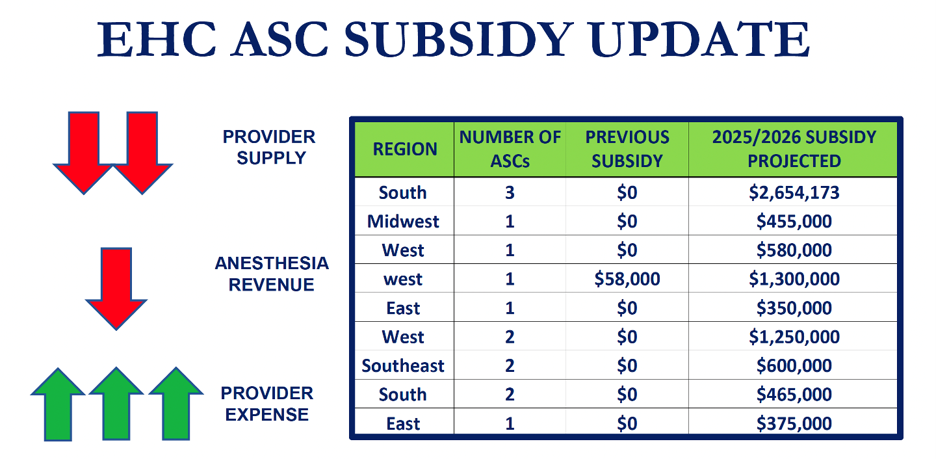
[FIGURE 1 — Recent ASC Contract Renewal Examples]
How ASCs Are Responding
With anesthesia becoming a significant expense, ASCs should focus closely on OR utilization. Staffing an anesthetizing location for only a few hours of surgery each day is no longer economically viable.
Centers are consolidating schedules, reducing unnecessary staffed locations, evaluating CRNA-only models where clinically appropriate, and exploring flexible staffing arrangements. Technology featuring predictive analytics can support these efficiency efforts.
Some centers have moved toward directly employing anesthesia providers. Employment, however, does not eliminate the underlying economics. The ASC must still pay competitive compensation and employ sufficient providers to meet the required anesthetizing hours. In our experience, direct employment often costs as much as—or more than—coverage through an independent anesthesia group, even before accounting for transition costs.
A New Approach to ASC Contracting
For anesthesia groups, in order to afford the required coverage, ASC contracting must now be approached with the same financial discipline traditionally applied to hospital agreements.
The first step for groups is developing an accurate staffing model based on the center’s actual requirements. This should incorporate vacation, required coverage hours, appropriate anesthesiologist-to-anesthetist ratios, case complexity, and operational requirements.
Groups should then work with ASC leadership to optimize staffing without compromising clinical quality or throughput. A joint replacement program may require additional anesthesia resources for regional blocks and turnover, while a cataract room may operate with a different model.
Most importantly, the staffing model must be translated into a financial proforma that incorporates local compensation and benefits, comparing the true cost of anesthesia coverage with realistic professional collections.
The New Reality
When projected costs exceed anticipated collections, the anesthesia group will need financial support to maintain stable, high-quality coverage.
Support can take several forms, including hourly, daily, or weekly payments, per-click arrangements, or a traditional revenue guarantee. The structure matters less than ensuring the agreement supports recruitment, retention, and clinical requirements.
The economics of ASC anesthesia have changed. Reliable anesthesia coverage is increasingly an operating investment necessary to support surgical volume, surgeon satisfaction, and the overall financial performance of the center. ASC leaders should recognize that in the “new normal”, stable anesthesia coverage can be a competitive weapon that can drive surgical volume and financial results.
For anesthesia groups, the message is simple: understand the true cost of coverage, optimize the staffing model, build an accurate proforma, and negotiate financial support when the economics require it.
Putting the Strategy into Practice
Determining whether an ASC anesthesia arrangement is sustainable requires more than reviewing the subsidy alone. A practical assessment should evaluate and optimize staffing requirements, OR utilization, provider compensation, professional revenue, and coverage expectations so both the ASC and the anesthesia group can reach a financially realistic coverage strategy.
How Enhance Can Help
Enhance Healthcare Consulting partners with ASCs, hospitals, health systems, and anesthesia groups to evaluate staffing, utilization, compensation, and professional revenue.
Contact us at enhancehc.com/contact or 954.242.1296 to learn how Enhance can help your organization evaluate its anesthesia coverage model and develop a sustainable, financially sound strategy for the future.
At the Becker’s 32nd Annual Meeting: The Business and Operations of ASCs, taking place October 29-31 in Chicago, ASC leaders, surgeons and healthcare executives will explore strategies to drive growth, enhance operational performance, navigate reimbursement challenges and prepare for the future of ambulatory surgery. Apply for complimentary registration now.
